LOW – HIGH GAIN Overdrive

  • Steve Lukather Approved
  • Official Steve Lukather overdrive pedal
  • Sound design by Steve Lukather and Uli Rodenberg
  • Tested, played, and personally approved by Steve Lukather
  • Official branding on the pedal
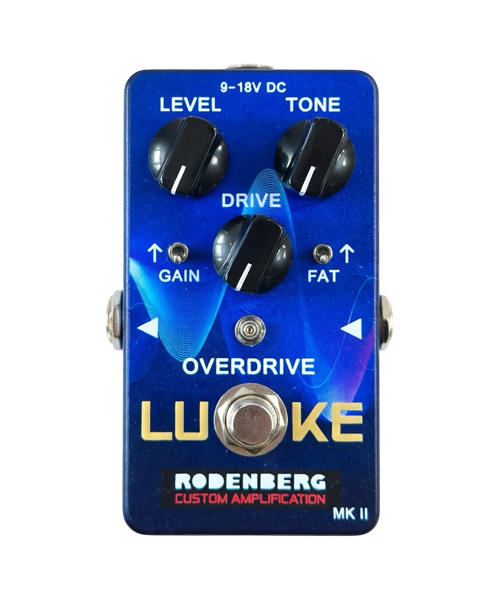
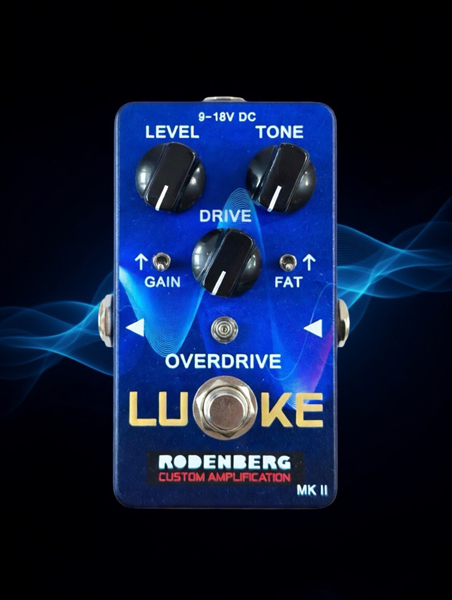
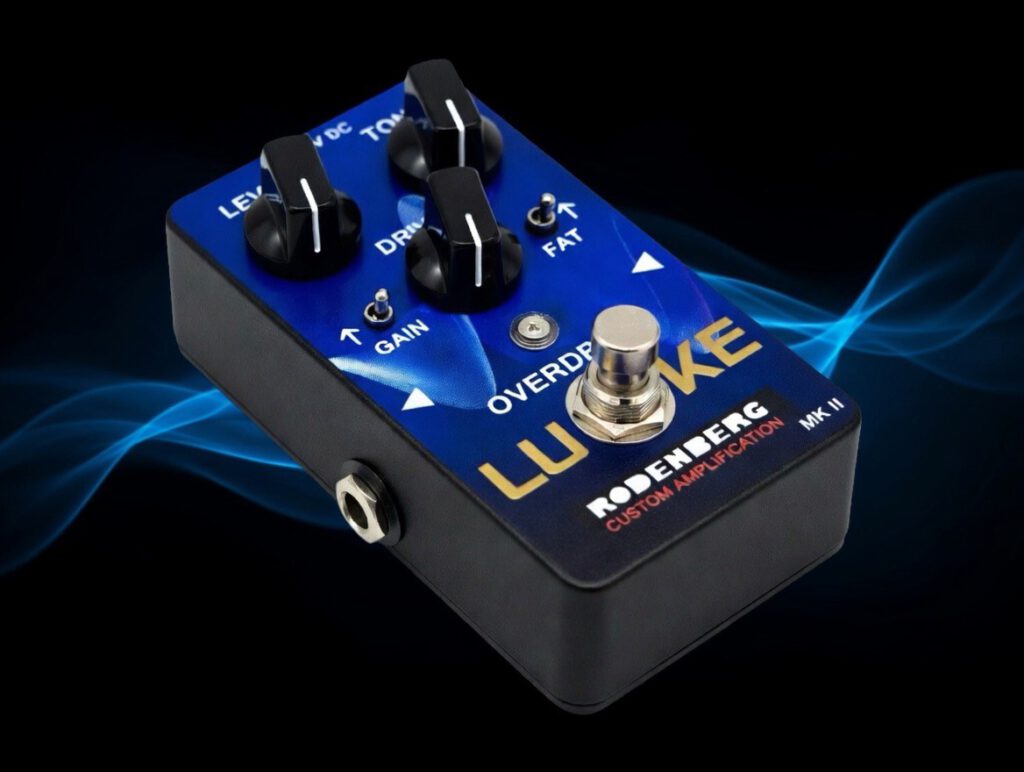
  • LUKE Overdrive - The Overdrive
    The LUKE Overdrive combines a LOW GAIN overdrive and a HIGH GAIN overdrive in one enclosure, delivering uncompromising audio quality, real-world stage performance, and signature tone. Developed in close collaboration with Steve Lukather, the LUKE Overdrive is designed for musicians who demand maximum control, tone, and flexibility at the highest level. From transparent low-gain textures to powerful, expressive high-gain sounds, the LUKE Overdrive offers dynamic response, clarity, and musical feel in every setting.
FEATURES
  • The LUKE Overdrive combines two overdrive sounds:
    LOW GAIN overdrive and HIGH GAIN overdrive in a single pedal.
  • The pedal offers an independent tonal character, switchable presets, and precise control over Level, Tone, and Drive.
  • The GAIN BOOST specifically increases distortion intensity and sustain without altering the fundamental character of the sound. Ideal for greater punch and additional headroom in the overdrive range.
  • The BASS BOOST enhances low frequencies in a controlled way, adding more foundation and punch without making the sound muddy.
  • The pedal features True Bypass switching.
  • Handcrafted in Germany, the LUKE Overdrive delivers maximum dynamics, tonal accuracy, and flexibility for musicians who demand uncompromising performance.
CLEAN / DRIVE
In front of a clean amp

When you run the pedal into a clean or slightly breaking-up amp, you get an open overdrive sound that can reach into high-gain territory without drifting into extreme distortion. The tone remains clear, structured, and highly articulate, with excellent note definition and cut.
Some users claim that the pedal only works well in front of a distorted amp, but this is not a limitation of the pedal itself. It comes down to how it is used, how it is set up, and the amp configuration.

In front of a driven or distorted amp

In front of an already driven amp, the pedal reveals its second major strength, exactly the way Steve Lukather uses it. The sound becomes faster, more focused, and more lead-oriented, adding gain without drastically altering the existing amp tone. The pedal integrates organically into the already working amp, enhancing what is there rather than replacing it.

Steve Lukather:
,I hear you EVERY night, it’s my fave Overdrive / Distortion pedal! I use them (SL-OD, SL-OD Deluxe / SL-OD DLX) in various situations, in the studio, live etc.‘

Steve Lukather has been using my pedals continuously since 2017, both live and in the studio. For him, it is his main overdrive: reliable, full of character, and a permanent part of his sound.

SOUNDS
LOW - HIGH GAIN Overdrive
  • Jewel LED Blue
  • BASS Boost (Preset Toggle switch)
  • GAIN Boost (Preset Toggle switch)
  • Controls: Level, Tone, Drive
SPECS
Power Supply
  • 9-18V DC, 50mA
  • Standard operating voltage: 9 V DC
  • Maximum operating voltage: 18 V DC
  • No battery operation
Dimensions
  • Black powder-coated aluminum enclosure
  • Dimensions: 2.4 x 4.4 x 1.2 (W × D × H)
  • Weight: 0.55 lbs
Made in Germany
  • 3-year warranty
  • Handcrafted in small production runs
LUKE Overdrive demo by Fabian Ratsak
LUKE Overdrive demo by Christian Klein
VIDEOS
LUKE Overdrive demo by Ludowig Briand
LUKE Overdrive demo by Anthony Fay
FAQ

Power Supply: 9V DC – 18V DC:
The pedal can be operated with 9–18V DC. Regardless of the supplied voltage, the internal circuitry remains fully stabilized, ensuring that the fundamental tone does not change. The standard operating voltage is 9V DC, this is also how Steve Lukather runs the pedal. A higher voltage is possible, but not necessary.
Higher voltage operation is possible, but not required.

Power Supply Notice:
For noise-free operation, we recommend using a stabilized, well-shielded power supply. Some digital power supplies, especially those with insufficient shielding, may cause hum or high-pitched noise.

When using a multi-output power supply, the outputs should be galvanically isolated from each other.

Any noise issues do not originate from the pedal itself, but are usually caused by an unsuitable power supply or an unfavorable device combination. It is possible that a power supply works perfectly with one pedal but produces noise with another.

If noise occurs, we recommend the following test:
Connect the pedal directly to the amplifier, do not connect a guitar, and power the pedal using a separate power supply. When switching the pedal on, only operation or gain-related switching and control noises should be audible, no hum and no high-pitched noise. This test is an effective way to check the pedal independently of the rest of the signal chain.