


CLEAN BOOST – EXITER
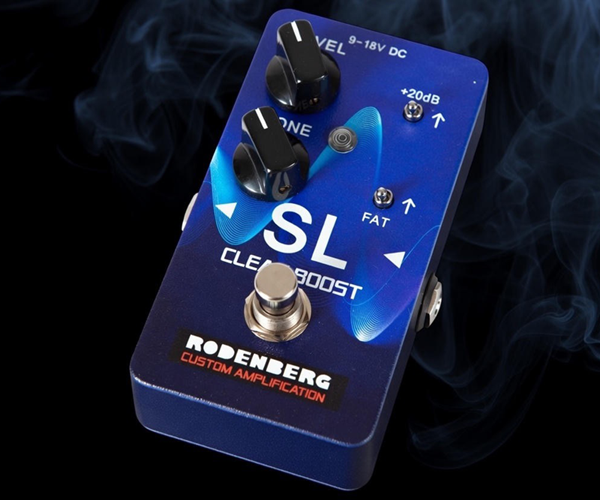
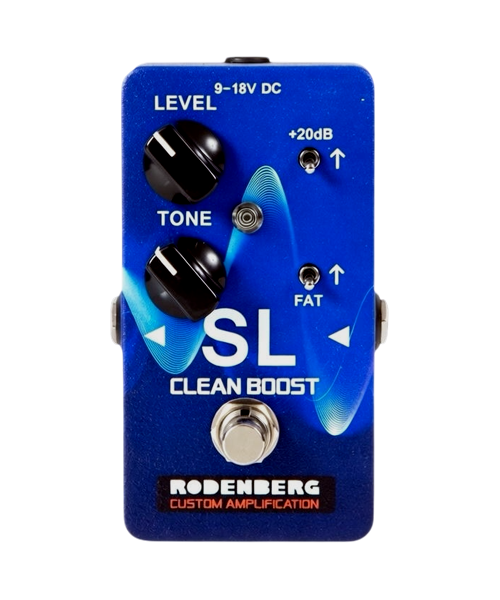
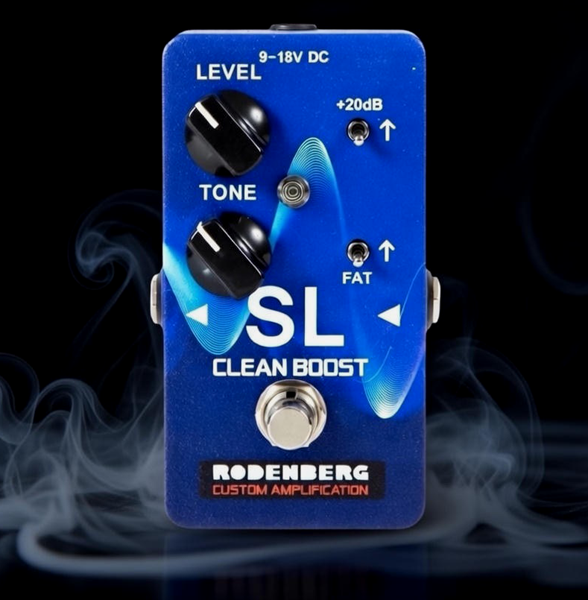
When used in front of a clean amp, the SL BOOST does more than simply raise the signal level by up to +20 dB. It opens up the sound in a musical way. Instead of just getting louder, the tone gains clarity, presence, and punch. The SL BOOST behaves like a musical exciter: harmonics emerge in a controlled manner, the attack becomes more defined, and the sound sits effortlessly in the mix, without harshness and without compression. The result is a crystal-clear, lively tone that 'lifts up', takes up more space, and translates every nuance of your playing. Ideal for clean sounds and as an always-on tool for maximum transparency.
When used in front of an already driven or distorted amp, this character remains intact but gains a crucial additional factor: The SL BOOST specifically drives the input stage of a tube amplifier, delivering more drive, natural compression, and harmonic saturation. The core character of your amp remains unchanged, but becomes denser, more lively, and more responsive. Ideal for blues and rock sounds, and once again perfect as an always-on tool for maximum transparency.
Power Supply: 9V DC – 18V DC:
The pedal can be operated with 9–18V DC. Regardless of the supplied voltage, the internal circuitry remains fully stabilized, ensuring that the fundamental tone does not change.
The standard operating voltage is 9V DC, this is also how Steve Lukather runs the pedal.
A higher voltage is possible, but not necessary.
Higher voltage operation is possible, but not required.
Power Supply Notice:
For noise-free operation, we recommend using a stabilized, well-shielded power supply. Some digital power supplies, especially those with insufficient shielding, may cause hum or high-pitched noise.
When using a multi-output power supply, the outputs should be galvanically isolated from each other.
Any noise issues do not originate from the pedal itself, but are usually caused by an unsuitable power supply or an unfavorable device combination. It is possible that a power supply works perfectly with one pedal but produces noise with another.
If noise occurs, we recommend the following test:
Connect the pedal directly to the amplifier, do not connect a guitar, and power the pedal using a separate power supply. When switching the pedal on, only operation or gain-related switching and control noises should be audible, no hum and no high-pitched noise.
This test is an effective way to check the pedal independently of the rest of the signal chain.